Production: Day 1


 Production: Day 1 The start of our film 


Today marks day 1 for filming our chess films and there are some things I would like to address in this blog post.

Our mistakes. 
As a director I have learned to quickly own up to mistakes that my crew and I have done during day 1 of filming so that we can do better for day 2 and 3. The phrase, “ Revise, Regroup, and re-evaluate” was the main idea for today. Thinking this way allowed us to actively review our methods and footage, adjust anything that needs to be adjust, and then re-assess our approach. For instance, my cinematographer and I had to revise our shot log, specifically the camera shot, angle, and movement. We ended up changing the camera shots and angles for a lot of scenes after taking a few test runs of the original and coming to the conclusion that we need to switch our strategy for a better more meaningful shot. Fortunately, we had assistance from our producer and we were able to reassemble our ideas, and set a new meaning for the shot. 

A still photo of our producer assisting us with a different angle

A still of my cinematographer and I revising the camera shot and angle for scene 2


On the other hand, everything went as plan. During our pre-production phase I have created an agenda so that we are on track with all the scenes that we must shot per filming day, therefore we were on track, completed our day 1 scenes right on the dot before returning to class. 

Pre-Production: Finalizing my Part

 Pre-Prodcution: Finalizing my part


During this process I was able to organize all the documents from my crew and configure a production portfolio to present to the producer. There were some challenges presented to us like bad communication, for instance, I was not made aware that a document was competed until the next morning, making me delay in completing the entire portfolio. Fortunately everything was put back in order as soon as I received the later documents. During our talking session with our producer we were made aware of certain things we need to revise, like the call sheet for example, due to it not being completed to the full extent. Overall we received the green-light and was able to begin our film. At the end of the day I had to revise the call sheets and discuss with my cinematographer to have her create a more in depth version of the shot log 

Pre-Production: My Piece of the pie

 Day 3: My Piece of the Pie


In this blog, I will be discussing everything I am doing as my role as the director, and how it is an important piece of the pie that is our chess film. 

Currently I need to work on the genre statement, script, call sheet, and casting report before November 11th, which is the day I construct all the documents onto one singular document. However, I plan on focusing on the genre statement, script, and call sheet. 

Genre Statement:


Writing the Genre Statement was fairly simple as my group mates and I have been discussing the genre and why it is best for our idea for a few days now. I recently rewatched Scream (1996) and used that as an example to justify why we decided to do a thriller/slasher. Moreover, I analyzed a few famous clips to speak about the specific generic elements of the film.


A screenshot of me working on my genre statement while analyzing a clip from 'Scream' 


Script:

Regarding our script, I decided that is a job better done when all of us are participating, rather than just me constructing it. Therefore, I will dedicate next class time, which is day 4, to completely construct the script . 

Call Sheet: 


While some parts of the Call sheet I can complete on my own, I will also like to actively get the opinions of my groups mates before coming to a final decision on what should be on the call sheet, which I will also decided to do on day 4.


Pre-Production: Preparations


 Day 2: Preparations


It is officially the first day of preparations for the Chess Film. Today me and my group decided on doing a thriller/slasher genre after doing some research. We know that we need to be able to develop a sense of suspense and gloom which everyone has a part in achieving. For instance, the cinematographer has to figure their choice of lighting to make it actually seem like a thriller, manipulate the camera to certain angles like extreme close ups to make the audiences feel engaged, and use shallow depth-of-field to focus the audiences attention. The editor will figure out how to transition through cuts to give off an effect. Sound designer has the ability to choose sounds that add on to the feel of a thriller/slasher

Moreover, today is the day that our Teacher teaches us how to properly use the filming equipment and allowed us to go around the school's courtyard to pick our filming spots. While we were outside me and the cinematographer tried some test shots to figure out how we will set the camera for certain shots, using our editor and sound designer as place holders. 


Example of our test shots


Furthermore, we continued to brainstorm ideas for our script, our editor, who has plenty of prior knowledge on chess, was assisting in creating scenes so that it can realistic to the actual game. Currently outside of school, we are checking in on each other using our group chat, just to address certain things and encourage each other! I've also created a shared note, with a quick run on what we should be completing in our pre-production process, since it is my job to ensure that everyone is on task and on time.


       A screenshot of our group chat, encouraging each other

                     
                               A screenshot of the shared notes, including our pre-production agenda


Pre- Production: Assessing the task at hand

 Day 1: Assessing the task at hand


It is time for me and my fellow classmates to being our journey in creating and filming the Chess Film. In class, we were assigned into the groups that we will be working with to produce the Chess Film. After situating, we created a group chat to make sure we are all in contact and working on this outside of school. I feel fairly confident with the group members I was assigned, which we did get the chance to figure out who will be playing what role. At first, I choose to be the Cinematographer, however, my classmate protested against my choice, encouraging me to be the director instead, due to my leadership skills. I couldn't ignore the idea, so I agreed to switch my role with her and so far I believe I made the right decision. Additionally, my group members and I got together to brainstorm a few solid ideas for our film, quickly landing on one that I am eager to create. We are debating between doing a thriller or comedy genre for our film. Finally, I did slight preparations for pre-productions for our group. For instance, I created a shared document which holds all the information we should know and any reminders for future production. 


Each group member can use this document as reference whenever they are completing their portions of the portfolio.


Media Language Theory Pack Five: Postmodernism/Baudrillard

 Postmodernism/Baudrillard

Select a scene from a film with a critical postmodern element:


Film: The Matrix

The Matrix is filled to the brim with postmodern elements. For starters, the film's central premise revolves around the idea that our perceived reality is a computer simulation. The Matrix itself is already based in a hyperreal environment. This hyperreality, blurring of the lines between reality and simulation is a key characteristic of postmodernism. The narrative jumps between different realities and perspectives, using inertia, fragmenting the traditional storytelling approach. This mirrors the postmodern emphasis on multiple narratives. The film heavily uses "authenticity is impossible" as the very foundation of the Matrix is the inability to trust your senses and discern what is real. This immediately throws the idea of authenticity into the question since the stimulated world is so convincing.  


Media Language Theory Four: Structuralism/ Levi-Strauss

 Structuralism/Levi-Strauss


Select Two of the following clips and provide a paragraph Each applying the Levi-Strauss theory of Structuralism to the clip:


Clip C: They Live

First off, the purpose of this scene forces the main character, John Nada, to finally wear the sunglasses, which allow him to see subliminal messages and aliens all around him; this propels the plot forward. Structuralism argues that meaning is created through binary oppositions. In this clip, Nada is presented with the sunglasses represents "seeing" the truth, discovering the truth of our world for the first one, while Frank, resisting the glasses, represents blindness to the truth. This clip uses the functions to clearly explain ideas by showing that "seeing" represents awareness, and the ability to perceive the manipulative forces that are in control. On the other hand, "blindness" represents ignorance and conformity in being oblivious to the truth about our reality. This clear-cut binary helps the audience grasp the film's themes of hidden control and the importance of questioning our surroundings.


Clip D: Spider-Man: Into the Spiderverse

 First and foremost, the purpose of the scene introduces the main antagonist. It dramatically unveils Doc Ock as the primary villain, establishing her ability and power almost instantly in the clip. In this clip, several binary oppositions take place. For instance, the film switches the traditional gender roles of the Spider-Man universe by portraying Doc Ock (who was created male) as female; this challenges audience expectations and adds complexity to the character. Since I have previously watched this film, I know that at this point, Doc Ock represents knowledge as she possesses a deep understanding of the collider and its implications, while Miles represents ignorance as he is completely unaware of the true threat. This binary opposite highlights Miles' journey of discovery throughout the whole film. The "to create identifiable character types" function is relevant here. The clear picture of each character's personalities helps the audience quickly understand their roles within the narrative. For instance, Doc Ock as the antagonist, a figure of fear and intellect.


Media Language Theory Three: Genre/Neale

 Genre/Neale

For each trailer, do the following:


Everything, Everywhere, All at Once:

Identify what you believe to be the film's genreAction or Sci-Fi

Explain which of the five conventions would be best used to determine the genre, and why-
 

 I believe narrative considerations because we could already sense that action will be involved in the film, therefore we will expect the narrative structure to include the set up, which introduces the main characters, the setting and conflict. We also expect to see the confrontation which escalates the conflict and the resolution, which resolves the conflict, shows the consequences, and delivers the climax.


Which elements of text genre subversion seemingly apply to the film, and how?-

Cultural effects because throughout the film we begin to see how cultural trends, Asian culture in specific, affect the style of the production. It will also allow watchers to make connections to their prior knowledge of Asian cultural trends and that will shape how they view the film.


Apply at least one aspect of genre hybridity to the film and explain how it's relevant-

Sci-fi action is the genre hybridity which offers a thrilling escape into different dimensions, where the boundaries of science and technology are pushed to their limits, causing us to question is certain things are even possible in the real world. Often, the fate of humanity is pulled into the mix.

Phantom of the Paradise:

Identify what you believe to be the film's genre-  Thriller/horror

Explain which of the five conventions would be best used to determine the genre, and why-

Character Conventions would be best used to determine the genre. Viewers can expect the film to deliver explicit character driven motifs based off the trailer. Since we can already see who the anti-hero of the film will be, we can make a judgement that the anti-hero will be the main character; and learn about the lead's tragic narrative journeys.


Which elements of text genre subversion seemingly apply to the film, and how?-

Social Context. The film draws heavily from classic gothic horror literature. Due to the Gothic horror roots, the characters are shaped to create representation that are relevant to the gothic horror literature. After doing some research, I have discovered that it takes heavy reference from the 1925 film, The Phantom of the Opera, therefore, the characters must be shaped to create the correct representation of the disfigured, masked composer who lurks in the shadows of a grand music hall. 


Apply at least one aspect of genre hybridity to the film and explain how it's relevant-

Horror/Musical is the genre hybridity. The film satirizes the music industry by using classic gothic horror literature, which represents gothic romance and tragedy; rock opera musical which has loud, expressive music, often used to comment on the narrative. This is relevant because it exposes the nature of fame and the shallowness of success in the music industry, one instance, the film often claims of the main character "selling his soul" to the music industry.

Electric Dreams:

Identify what you believe to be the film's genre- Sci-fi

Explain which of the five conventions would be best used to determine the genre, and why- 

Level of verisimilitude. Knowing that levels of verisimilitude is the degree in which a media product references the real world cam help us indicate that this film would be around sci-fi, fantasy and comedy. Only Science fiction and fantasy type films produce limited levels of verisimilitude.


Which elements of text genre subversion seemingly apply to the film, and how?-

Historical effects. By using common prior knowledge, viewers would know that computers actually became accessible to consumers as of early 1980s, and if we make the connection to the production of the film we can see that the film was released in 1984, in the peak years of when computers were commonly used. This historical event shaped the production of this film completely because it is based on the new coming of computers; since no one really knew much about them yet it creates a element of surprise throughout the film. 


Apply at least one aspect of genre hybridity to the film and explain how it's relevant-

Sci-Fi and comedy is the genre of hybridity. Often in sci-fi films fictional computers are featured, as seen in this film when the computer can speak for itself and have its own though process which heavily effects the narrative. Additionally, sci-fi often explores how technological progress affects society, showing how society reacts the upbringing of computers.


Media Language Theory Two: Equilibrium/ Todorov

 Equilibrium / Todorov


Identify at least one example of each of the following in the clip:

Mission: Impossible - Rogue Nation (2015)


Proppian characters: 
  • The hero: Ethan Hunt
  • The donor: Benji Dunn
  • The helper: Luther Stickell
  • The dispatcher: William Brandt


Equilibrium: A team struggles to remove an unwanted package off a plane, Ethan the protagonist, is needed to complete the mission.

Disruption: Benji, who works on the hacking, continues to mess up and struggles to make to correct decisions. In the process, Benji fails to open the correct door that Ethan planned on jumping into. Benji finally opens the correct door but nearly risks Ethan's life in the process.

New equilibrium: Ethan straps himself and a couple of parachutes to the wanted package and sends himself and the package flying off the plane. This originally was not the plan at first but he still managed to successfully get the package off the plane.


In media res: The action begins in the middle of the scene after Ethan finally appears to be jumping on the moving plane, which is something he should have done before the package made on board.

Multiperspective narratives: One of the opposing characters that were holding the package hostage on the plane, watches as Ethan sends himself and the package right off the plane using a parachute.

Through Equilibrium, in the first 6 minutes we were able to learn everything we needed to know about the characters, and make connection to Proppian characters. For instance, we could already tell that Luther is considered the "helper" in reference of Proppian in only his first dialogue due to him stating, "Benji needed my help". We could also see how disruption is presented as things do not go as expected with Benji's plans, as he has explained that already tried a plan A and B and both have failed. We were given a new equilibrium when Ethan appears with a last minute plan, which nearly failed because of Benji many failed attempts, but eventually became successful.


Media language Theory One: Semiotics/Barthes

 Semiotics: Roland Barthes


Examples of the each of the following in the clip: 

A Car Crash & A Harmonium, Punch-Drunk Love


Sign- the car crash and the harmonium.

Signifier- 
  • The car crash that occurred after a silent moment of the sequence which could represent disruption and chaos. 
  • The harmonium which is an instrument that plays gentle, romantic sounds, which could represent emotion or harmony.

Signified- 
  • The crash could reflect the Barry's mental state as the scene goes from complete silence to utter destruction in moments.
  • The harmonium suddenly making an appearance could suggest that even among all the chaos and destruction, love will prevail in the end.

Denotative meaning- 
  • car crash: an instance of a car colliding with another vehicle or with an object.
  • harmonium: a keyboard instrument in which the notes are produced by air driven through metal reeds by foot operated bellows.

Connotative meaning-
  • car crash: to describe something or someone that has suffered ruin or calamity
  • harmonium: to represent harmony, peace and intimacy

Code- the desk placed in the corner, the empty warehouse, the cluttered desk, car crash, and sudden appearance of the harmonium.

Semiotic is the study of signs and codes or sign systems and after analyzing the clip I realized that it heavily uses semiology. The scene would not be nearly as impacted if it only showed the car crash, therefore, by placing the harmonium (contrasting with the car crash), the sequence creates an unforgettable experience that would have the audience thinking back to it and make connections with the rest of the film. It also gives the audience a glimpse into Barry's complex character without using any type of dialogue. The isolated work place represented his loneliness and social anxiety, moreover the car crash represents his aggression filled emotions. However, the harmonium appearing represents his yearning for love and peace and most likely foreshadows that he will find love in the end.


Blog post five: Depth of Field


Depth of field 


1.  stills from existing media that demonstrate the following:


a. a still showing how deep is used to convey conflict, character, or development 


                                                                      Joker 2019

b. a still showing how shallow is used to convey conflict, character, or development 


                                                     Avatar: The Way of Water 2022


c. a still showing how soft is used to convey conflict, character, or development 
 

Harry potter and the Half-Blood Prince 2009


2. stills you create that demonstrate the following:


a. a still showing how deep is used to convey conflict, character, or development 


b. a still showing how shallow is used to convey conflict, character, or development 


c. a still showing how soft is used to convey conflict, character, or development 


3. reflection

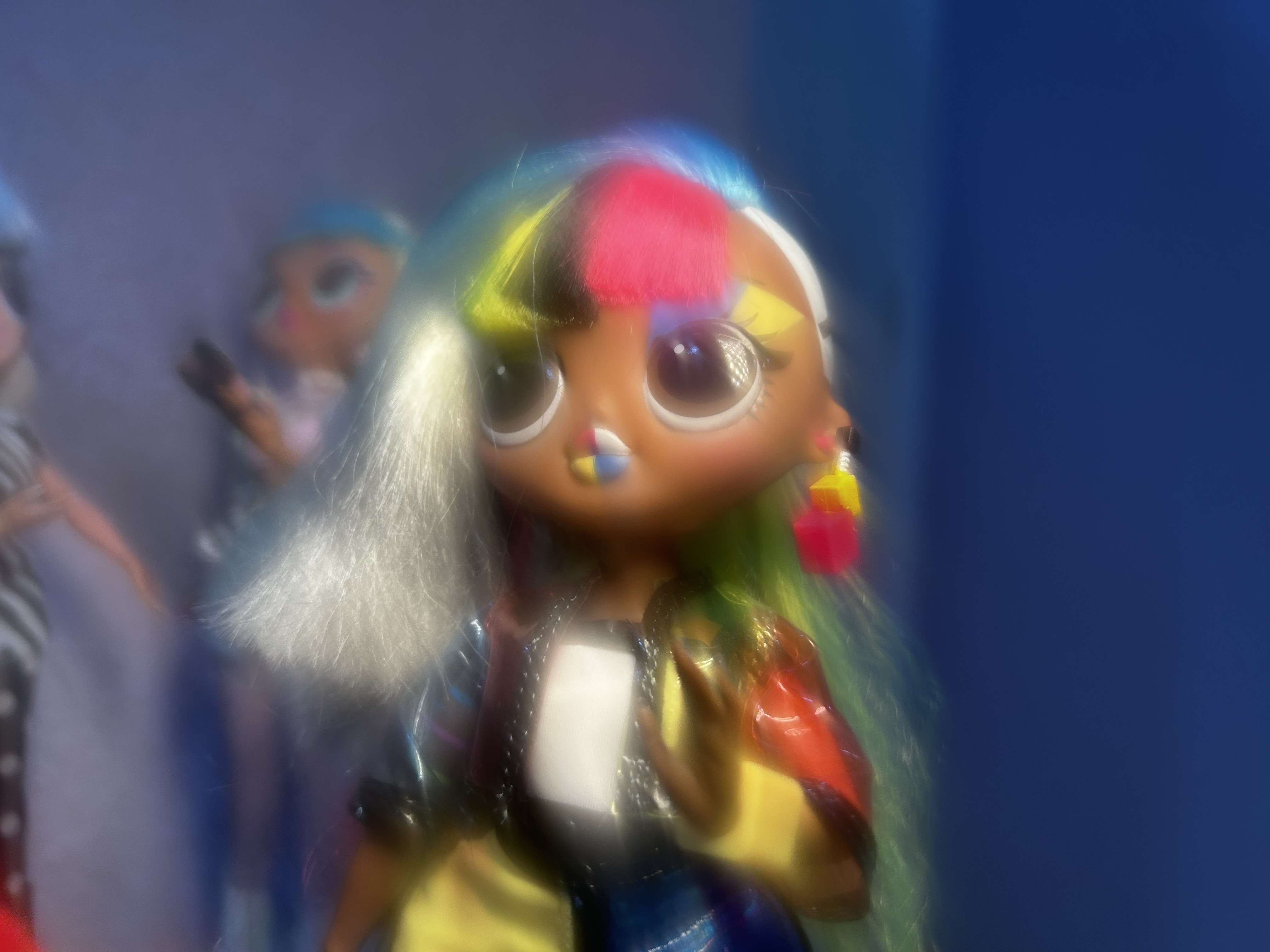
Creating the still photos presented several challenges, particularly in achieving stills for a soft focus. The main difficulty was in balancing the focus to make sure that the image was clear enough to be recognizable, yet soft enough to create the artistic effect. This really required for me to create a deep understanding of the camera's aperture and shutter speed settings, as well as the ability to manually adjust the focus. Another challenge was in selecting right lenses but since I only had my iPhone 14, I was limited to only a few default options. I was considering installing a lens app that places addon camera lenses but I wanted to see what I could achieve with just the default lens on my camera app. Additionally, I had be careful of the lighting conditions to avoid any harsh shadows or overexposure, which could destroy the idea of the soft focus effect. Despite all these challenges I believe I did okay to capture the soft focus look and the deep and shallow focus look.


Final Cut!

 Final Cut!